

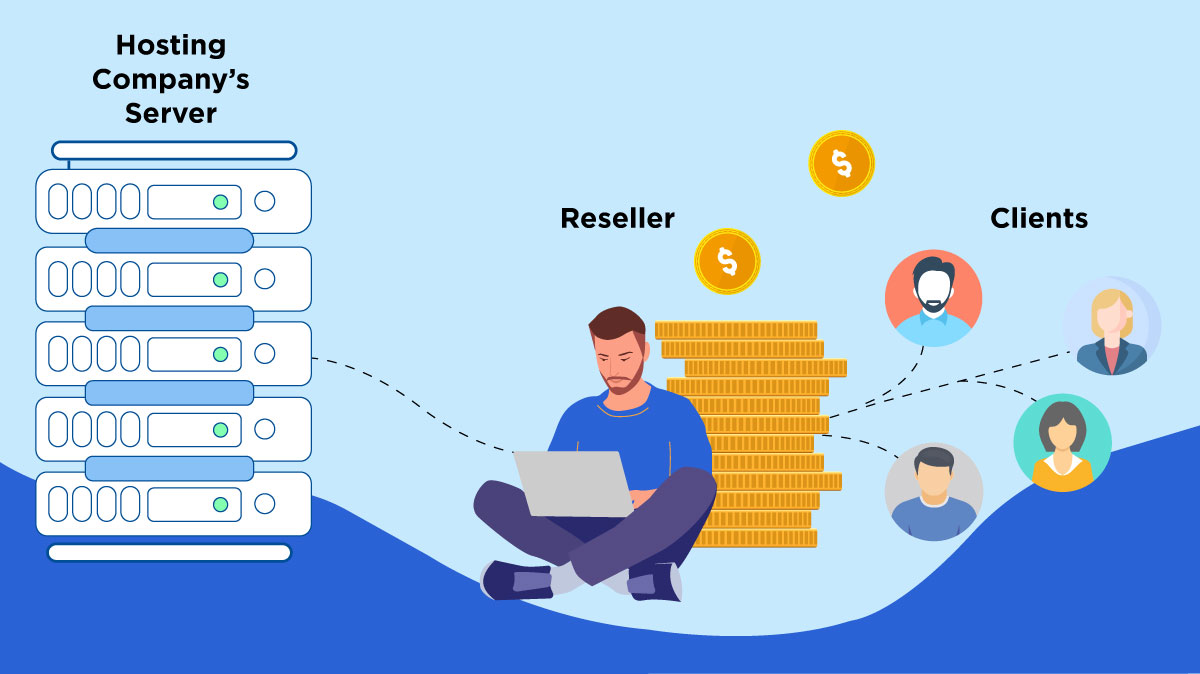
With Reseller Hosting, you buy server resources from an established provider, divide them into smaller plans, and sell those plans under your brand. It can turn one-time website projects into monthly or yearly income.
Businesses increasingly depend on websites, online stores, and branded email. That creates an opportunity for freelancers, developers, IT consultants, and digital agencies to sell hosting without buying physical servers.
This guide explains how the service works, which features matter in 2026, what it costs, where profit comes from, and how to choose a reliable provider.
What Is Reseller Hosting?
Reseller Hosting lets you purchase hosting resources from a larger company and resell them to your customers. The provider supplies the server, network, storage, control panel, and core technical infrastructure.
You divide storage, bandwidth, email, database, and account limits into packages. Each customer receives a separate account, while you control the brand, prices, and customer relationship.
Regular shared hosting is mainly designed for hosting your own sites. A reseller account is built to manage multiple customer accounts. cPanel defines a reseller as an account owner that buys resources from a provider and allocates them to cPanel accounts it sells.
How Does Reseller Hosting Work?
The setup includes the main provider, the reseller, and the end customer.
The provider manages the servers, network, hardware, updates, and core security. The reseller uses a panel, often WHM, to create packages and customer accounts. Customers normally get cPanel access for files, databases, domains, and email.
Depending on the permissions granted, WHM lets resellers create, suspend, upgrade, or remove the accounts they own.
Your job is to build the brand, set prices, collect payments, answer questions, and manage customer relationships. The original provider stays mostly invisible when private nameservers and white-label tools are included.
Who Should Use This Hosting Model?
This model works best for people who already serve website owners:
- Web design and development agencies
- SEO and digital marketing companies
- Freelance website developers
- IT support providers
- Domain and email service sellers
- Entrepreneurs launching a hosting company
- Businesses managing several client websites
Bundling hosting with design, maintenance, SEO, or email can improve retention. The reseller gains recurring income, while the customer gets one point of contact.
Major Benefits of Reseller Hosting
Low Startup Cost
You do not need to buy servers, rent data-centre space, or hire a full server team. A managed plan lowers the cost and technical barrier to entry.
Recurring Revenue
Monthly and yearly subscriptions can create predictable income and help cover agency expenses.
White-Label Branding
You can use your own name, logo, pricing, support details, and branded nameservers. cPanel includes controls for reseller nameservers and permissions.
Easy Account Management
A central dashboard helps you create accounts, assign packages, change limits, process upgrades, and suspend overdue services.
Scalable Growth
Start small, then upgrade as your customer base grows.
No Hardware Maintenance
The provider usually handles monitoring, hardware, networking, and platform updates.
Essential Features to Look For in 2026
A professional, Affordable Reseller Hosting service should include the tools needed to run a reliable business:
Panel’s AutoSSL can install domain-validated certificates automatically, while Let’s Encrypt provides free TLS certificates for HTTPS.
- NVMe or fast SSD storage
- WHM and cPanel access
- White-label nameservers
- Free automatic SSL
- Scheduled backups and clear restore rules
- Malware scanning, firewall, and DDoS protection
- Reliable email hosting and spam controls
- Account migration assistance
- A published uptime commitment
- 24/7 technical support
- Clear CPU, memory, inode, account, and storage limits
- Easy upgrades without long downtime
Ask where backups are stored, how often they run, how long they remain available, and whether restores cost extra. cPanel supports scheduled backups and local or remote restoration, but providers set their own customer policies.
Golden nugget: Do not buy a plan only because it says “unlimited.” Read the fair-use policy and confirm the real CPU, memory, process, inode, storage, and account limits.
Reseller Hosting Costs and Pricing
Costs depend on storage type, disk space, bandwidth, cPanel account limits, backup policy, security software, support, and billing term.
Your budget may also need to cover:
- Domain registration and website development
- Billing and automation software
- Payment gateway charges
- Branding and marketing
- Premium backups or security
- Customer support time
- Per-account control-panel licensing
Control-panel fees matter in 2026. Some packages separate server resources from cPanel account charges. HostBreak’s current page lists account limits, NVMe storage, migration, SSL, backups, white-label features, and separate cPanel fee notes across its plans.
Create packages for personal sites, business websites, and online stores. Price them after calculating fees, software, support, taxes, refunds, and profit.
How to Start a Reseller Hosting Business
Step 1: Choose a Target Market
Focus on local businesses, bloggers, agencies, schools, or online stores. A narrow market makes your offer easier to explain.
Step 2: Select a Reliable Provider
Compare speed, location, uptime terms, security, backups, migration help, support, and upgrades. Test support before a long contract.
Step 3: Create Honest Packages
Set clear limits for storage, email, databases, websites, and bandwidth. Avoid oversized plans that cannot perform well on your available resources.
Step 4: Build Your Brand
Create a professional website with pricing, features, support channels, refund rules, acceptable-use terms, and a privacy policy. Use branded nameservers and business email.
Step 5: Automate Billing
Use billing software to create invoices, collect recurring payments, provision accounts, send reminders, and manage overdue services. WHMCS supports automated billing, renewals, provisioning, and server connections.
Step 6: Promote the Service
Use local SEO, blog content, referrals, social media, partnerships, and bundled website packages. Start with people who already trust your work.
How Much Profit Can Resellers Make?
Profit depends on customer volume, package prices, provider costs, licensing, support work, and cancellation rates.
Suppose your monthly platform cost is PKR 12,000 and 20 customers pay an average of PKR 2,000. Gross revenue would be PKR 40,000. You would still deduct payment fees, marketing, support, taxes, refunds, and software.
The real strength of Reseller Hosting is recurring income plus related services. You can sell domains, maintenance, business email, premium SSL, SEO, development, security monitoring, and backup solutions.
Good support protects profit. Customers who receive fast, clear help are more likely to renew and recommend your company.
Common Reseller Hosting Mistakes
New sellers often choose the cheapest provider, copy a competitor’s prices, and begin selling before understanding the service.
Avoid these common problems:
- Advertising unrealistic unlimited plans
- Ignoring backup and restore policies
- Providing slow customer support
- Failing to monitor resource use
- Setting prices without counting every expense
- Using unclear refund and acceptable-use terms
- Depending on one marketing channel
- Selling the same package to every customer
- Keeping every backup on the main server
A weak provider can damage your name. Set realistic expectations, document support steps, and communicate clearly during incidents.
How to Choose the Best Reseller Hosting Provider
The best reseller hosting provider is not always the one with the lowest advertised price. Compare performance, data-centre locations, uptime history, reviews, support channels, security, backup frequency, white-label tools, account limits, licensing fees, migration help, refund rules, and upgrade flexibility.
Ask practical questions before buying:
- Are backups stored away from the main server?
- Is account restoration included?
- Are cPanel fees part of the displayed price?
- Can one busy account affect other customers?
- How quickly are urgent tickets answered?
- Can you upgrade without changing nameservers?
- Who handles malware cleanup?
When we assess a plan, we start monthly when possible, create test sites, contact support, check email delivery, and test a restore. A real trial reveals more than a feature list.
Reseller Plans vs VPS Hosting
A reseller plan is designed to create separate customer accounts with simple management and less server responsibility. A VPS gives you more control over software, configuration, security, and resource allocation.
That control brings more work. An unmanaged VPS may require command-line skills, patching, monitoring, backups, security hardening, and troubleshooting.
Beginners and agencies often prefer managed reseller web hosting. Experienced administrators needing custom software or deeper control may choose a VPS.
Final Thoughts
Reseller Hosting offers a practical way to launch a branded hosting company without buying server hardware. It works best when you focus on a clear market, create honest packages, automate billing, and provide fast human support.
Do not judge a plan by storage and price alone. Check performance, account licensing, backups, SSL, security, migration help, support quality, and upgrade options. These details shape the experience customers connect with your brand.
Ready to build recurring revenue? Compare HostBreak’s reseller plans, calculate your full cost per customer, and choose a package with enough resources to serve clients reliably from day one.
Frequently Asked Questions
Is this hosting business profitable?
Yes. Profit is possible when prices cover platform fees, licensing, support, marketing, and refunds. Recurring customers and useful add-ons usually produce the strongest margins.
Do I need technical knowledge?
Basic knowledge of domains, DNS, email, cPanel, SSL, and backups helps. A managed provider reduces the need for advanced server administration.
Can I use my own company name?
Yes. White-label plans commonly support your logo, brand name, support identity, and private nameservers. Confirm which areas can be customized.
Can I upgrade my plan later?
Most established providers offer higher storage, bandwidth, and account limits. Check whether an upgrade requires migration or nameserver changes.
What services can I sell with hosting?
Popular add-ons include domain registration, website maintenance, business email, backups, security monitoring, SEO, and website development.