
This fits a wider 2026 move toward convenient and compact food-preparation appliances. One industry estimate values this global market at $25 billion in 2026, with time savings and ease of use among the main buying drivers. covers types, features, prices, safety, and practical selection.
What Is a Dough Kneading Machine?
A Dough Kneading Machine mixes flour, water, oil, salt, yeast, and other ingredients into smooth, workable dough. Its main parts usually include a food-grade bowl, kneading blade or hook, electric motor, lid, and basic speed or timer controls.
Unlike a standard mixer, a dedicated dough kneader machine is built for heavier mixtures. Its bowl and blade pull, press, fold, and turn dough instead of only beating light ingredients.
Domestic models suit roti, naan, paratha, bread, and pizza. Larger units serve bakeries, restaurants, hotels, sweet shops, and food factories.
How Does a Dough Kneading Machine Work?
Using the appliance is usually simple. First, measure the flour and liquids according to the recipe. Add them to the bowl in the order recommended by the manufacturer, secure the lid, and select the correct speed or kneading time.
As the blade or hook turns, it spreads moisture through the flour and brings the ingredients together. Continued folding and stretching helps form the dough structure needed for soft roti, airy bread, chewy pizza bases, or firm bakery dough.
Once the cycle is complete, switch off and unplug the unit before removing the dough. Take out any removable bowl or blade, clear the remaining dough, and clean the food-contact parts as directed in the manual.
Practical tip: Do not judge a batch only by time. Flour type, room temperature, water level, and batch size can change the final texture.
Major Types of Dough Kneading Machines
Manual Dough Kneader
A manual kneader uses a hand-operated turning system. It is affordable for small household batches but still needs physical effort.
Electric Dough Kneader
An electric dough kneader mixes automatically. It suits families preparing roti, naan, or bread daily, and many models fit a normal kitchen counter.
Spiral Dough Mixer
A spiral mixer turns the bowl and hook in a controlled motion. It is common for bread and pizza dough and can handle larger loads.
A clear 2026 trend is spiral-style mixing moving into premium home appliances. Ooni’s Halo Core, announced in July 2026, uses a rotating bowl and spiral hook in a smaller home-focused format. etary Mixer
A planetary mixer moves its attachment around the bowl. It can knead, whip, and mix batter, offering more flexibility than a dedicated unit.
Commercial Dough Kneader
A commercial kneader has a stronger motor, larger bowl, heavy frame, and durable controls. It is intended for restaurants, hotels, bakeries, pizza shops, caterers, and industrial kitchens with steady daily production.
Key Benefits of Using a Dough Kneading Machine
The biggest benefit is time. Staff or family members can prepare other ingredients while the machine handles the repetitive kneading stage.
It also reduces strain on the hands, wrists, shoulders, and back. This matters when several batches are prepared each day.
Other valuable benefits include:
- More consistent mixing across batches
- Better control over flour and water distribution
- Smooth texture and improved elasticity
- Capacity to handle larger quantities
- Less direct hand contact with ingredients
- Faster kitchen workflow during busy periods
- Cleaner and more organised preparation
- Reliable output for roti, naan, bread, buns, pizza, pastries, and biscuits
A well-sized kneader can also improve portion planning. When every batch follows the same recipe, capacity, and cycle, a business can control waste more easily and maintain a more stable product.
Home vs Commercial Dough Kneading Machines
| Feature | Home Machine | Commercial Machine |
| Capacity | Small batches | Medium to large batches |
| Motor power | Lower | Higher |
| Usage | Occasional or daily home use | Repeated or continuous business use |
| Construction | Plastic or light metal body | Heavy-duty metal or stainless steel |
| Price | More affordable | Higher initial cost |
| Maintenance | Simple routine care | Scheduled servicing may be needed |
A household may need a compact automatic dough kneading machine for one or two batches. A bakery may need a large spiral model for peak production.
Choose by workload, not price alone. An undersized unit can cause slow output, motor stress, poor results, and early replacement.
Important Features to Check Before Buying
Start with bowl capacity. Check whether the figure means bowl volume, flour weight, or finished dough weight; they are not always the same.
Next, compare:
- Motor power: Match it to the planned batch.
- Food-grade parts: They should be safe and washable.
- Stainless steel: Durable and stain-resistant.
- Speed and timer: Helpful for repeatable results.
- Safety lock: Prevents operation with a loose lid.
- Overload protection: Helps protect the motor.
- Stable base: Reduces movement and vibration.
- Removable parts: Make cleaning easier.
- Warranty and spare parts: Confirm local support.
- After-sales service: Essential for business users.
When reviewing a model, also check the power supply, cable quality, plug type, and ventilation space. Electrical-safety guidance advises users not to operate appliances with damaged leads, clean them while plugged in, touch controls with wet hands, or overload wall sockets. Kneading Machine Prices and Cost Factors
The price of a Dough Kneading Machine depends on capacity, motor strength, body material, controls, brand, origin, warranty, and local service support.
Home models usually cost less because they use smaller bowls and are not designed for long production shifts. Commercial machines cost more due to their stronger frames, larger motors, high-capacity bowls, and heavier-duty components.
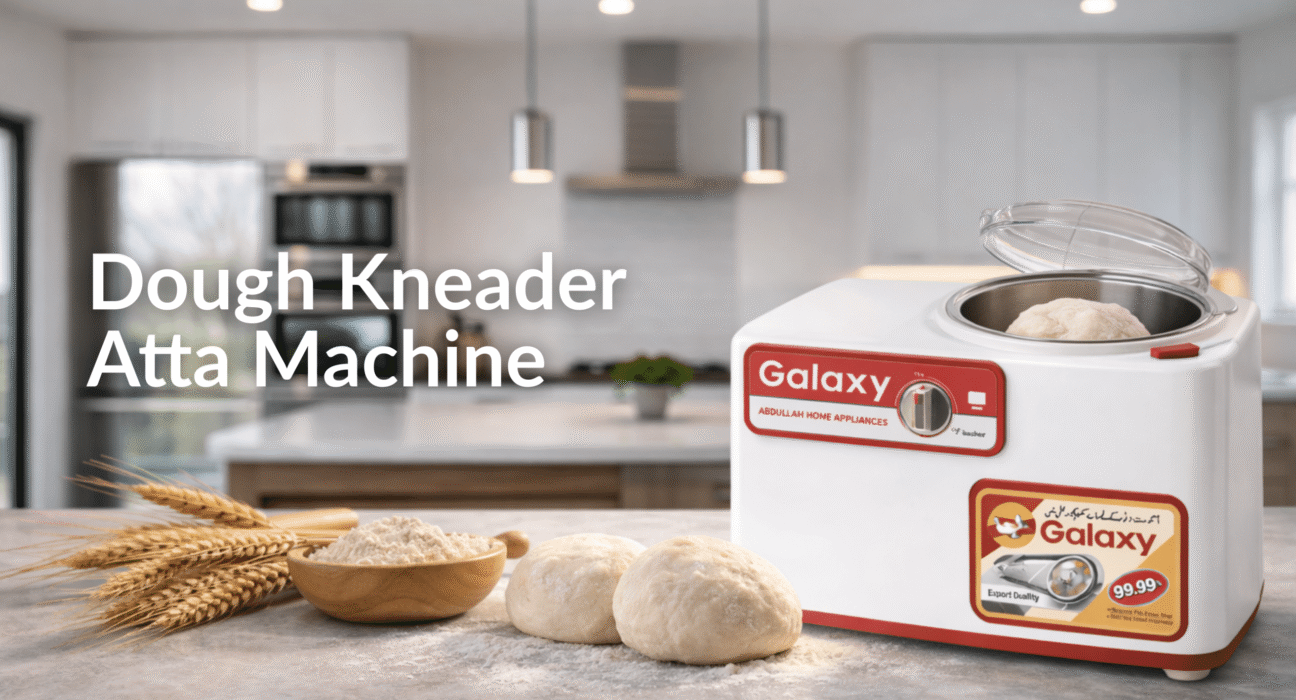
As a current Pakistan example, Brothers Home lists its 300–350W Classic BH-007 and Galaxy GH-007 models with a 3.25 kg capacity at PKR 12,000, while its Brothers BH-009 is listed at PKR 15,200. Prices can change, so buyers should confirm the latest amount and included warranty before ordering. practical buying point, we recommend comparing more than the purchase price. Consider electricity use, daily output, repair cost, spare-part access, cleaning time, and likely working life.
Common Uses in Homes and Businesses
This equipment can support both traditional and modern recipes. Homes use it for roti, chapati, naan, paratha, puri, pizza, and bread.
Bakeries and cafés use kneaders for bread loaves, buns, biscuits, pastries, rolls, and pizza bases. Restaurants, hotels, school kitchens, hospital kitchens, catering companies, sweet shops, and food factories use larger units to prepare repeatable batches at scale.
The recipe still matters. A strong machine cannot correct poor flour, incorrect water levels, expired yeast, or weak process control. Good equipment works best with accurate measurements and a tested method.
Cleaning and Maintenance Tips
Disconnect the machine before cleaning. Remove fresh dough at once because dried dough can collect around seals, edges, and blade fittings.
Wash removable parts separately. Keep water away from the motor, switches, wiring, and vents. Use a soft brush or non-abrasive cloth.
Food-safety guidance says cleaning removes food waste and grease, while sanitizing reduces microorganisms. Clean food-contact parts before sanitising, and remove parts where possible so every surface can be reached. cable, lid lock, blades, and moving parts. Never exceed capacity. Commercial users should keep a cleaning schedule and arrange servicing as recommended.
Common Mistakes to Avoid
Do not overload the bowl or guess ingredient quantities. Too much dry flour can strain the motor, while too much liquid may cause leakage and poor dough structure.
Avoid running a home model continuously like a commercial unit. Stop using the machine if it makes unusual sounds, smells hot, vibrates heavily, or repeatedly trips power.
Never clean it while connected to electricity. Also avoid buying a model without checking warranty terms, spare-part availability, motor power, food-contact materials, and local repair support.
How to Choose the Best Dough Kneading Machine
Before purchasing a Dough Kneading Machine, estimate how much finished dough is needed per batch and per day. Then select a bowl size and motor designed for that workload.
Use this checklist:
- Define daily and peak dough demand.
- Match capacity to the actual batch size.
- Compare motor power and duty cycle.
- Check bowl, blade, and body materials.
- Review lid locks and overload protection.
- Confirm cleaning access and removable parts.
- Read verified customer feedback.
- Check warranty, spare parts, and repair service.
- Ask whether installation or training is included.
- Compare long-term value, not only the sale price.
For Pakistani households, Brothers Home currently offers compact 3.25 kg kneaders aimed at everyday roti, naan, bread, and pizza preparation, giving buyers a useful local reference point for capacity and power. Thoughts
The right Dough Kneading Machine can save labour, improve batch consistency, and make a busy kitchen easier to manage. Home users gain convenience, while bakeries, restaurants, and catering teams gain speed and more predictable output.
Compare capacity, motor strength, build quality, cleaning access, safety protection, warranty, spare parts, and after-sales support before making a decision. A carefully selected Pizza Making Machine is not simply another appliance; it can become a dependable long-term part of daily food preparation.
Ready to reduce kneading time? Explore the available Brothers Home kneader models, compare their capacity and features, and contact the team for help choosing a suitable option for your kitchen.
Frequently Asked Questions
1. Which dough kneader is best for home use?
Choose a compact electric model with a food-grade bowl, secure lid, removable parts, and enough capacity for the family’s normal batch.
2. How much motor power is needed for dough kneading?
Power depends on capacity, dough stiffness, and usage. Follow the stated batch limit instead of choosing by wattage alone.
3. Can a dough kneader prepare roti and pizza dough?
Yes. Adjust water, kneading time, and batch size for soft roti dough or firmer pizza and bread dough.
4. Is a spiral mixer better than a planetary mixer?
Spiral mixers suit regular bread and pizza work. Planetary mixers are more versatile because they also whip and beat.
5. How should a dough kneader be cleaned?
Unplug it, remove dough, wash removable parts, wipe the body, keep water from the motor, and dry everything before reassembly.