
We often think of Tesla as just a car company. You see the Model 3s and Model Ys zipping around, and it is easy to stop there. But if you have been paying attention to the tech world lately, you know that Elon Musk has a much bigger vision. It is not just about what you drive; it is about how we power the whole world.
That vision just took a massive leap forward. We are talking about the Tesla China battery project renewable energy initiative. It is a game-changer. Recently, Tesla closed a deal worth over half a billion dollars to build a massive energy storage station in Shanghai.
Why does this matter to you? Because this project isn’t just a local construction job. It is a signal that the way we store and use electricity is changing forever. In this article, we are going to dive deep into what this project is, why China is the perfect place for it, and how it affects the future of green energy.
The Big Announcement: A $557 Million Commitment
Let’s get right into the numbers because they are staggering. On a Friday in June 2025, Tesla signed a deal worth $557 million (that is about 4 billion yuan).
This wasn’t a solo act. Tesla teamed up with China Kangfu International Leasing Co. and the local Shanghai government. The goal? To build a grid-scale battery storage station. This isn’t for charging phones; this is for keeping the lights on in massive cities.
From Factory to Field
This deal didn’t happen in a vacuum. Back in February 2025, Tesla officially started production at its new “Megapack” megafactory in Shanghai. It was a huge move. Before this, they were shipping these massive batteries from the US. Now, they are building them right where the demand is highest.
This new storage station will use those very Megapacks. By sourcing the batteries locally, Tesla cuts down on shipping costs and speeds up deployment. It is a classic move to make the Tesla China battery project renewable energy supply chain as tight and efficient as possible.
You May Also Read: Pentagon Big Tech Tesla Cybertruck: A New Era for Defense and Technology
Snapshot of the Deal
To make this easy to digest, here are the core facts of the agreement:
| Feature | Details |
| Total Investment | $557 Million (4 Billion Yuan) |
| Key Partners | Tesla, China Kangfu International Leasing, Shanghai Govt. |
| Product Used | Tesla Megapack (Grid-Scale Battery) |
| Primary Goal | Grid reliability and renewable integration |
Tesla China Battery Project Renewable Energy Update: The 2025 Boom
The energy world moves fast, so let’s look at the latest Tesla China battery project renewable energy update. As of mid-2025, the growth numbers are frankly ridiculous—in a good way.
During the first quarter of 2025, Tesla’s energy division rolled out 10.4 GWh of energy storage capacity. To put that in perspective, that is a 156% increase compared to the same time in 2024. The energy side of the business is growing faster than the car side.
China’s Massive Appetite for Power
Why is this update centered on China? Because China is building renewable energy faster than any country in history.
- Solar and Wind: China is installing solar panels and wind turbines at a record pace.
- The Problem: Is that solar and wind energy aren’t constant—the sun isn’t always out, and the wind doesn’t always blow.
- The Solution: You need big batteries to store that power for a rainy day (literally).
In 2024, China added 37 GW of battery storage capacity. That is more than double what they did the year before. The government is pushing hard for this because they have a target to hit Carbon Neutrality by 2060. They cannot get there without massive batteries, and that is exactly where Tesla steps in.
Also Read This: Tech Giants Envision Future Beyond Smartphones
Understanding the Tech: What is a Megapack?
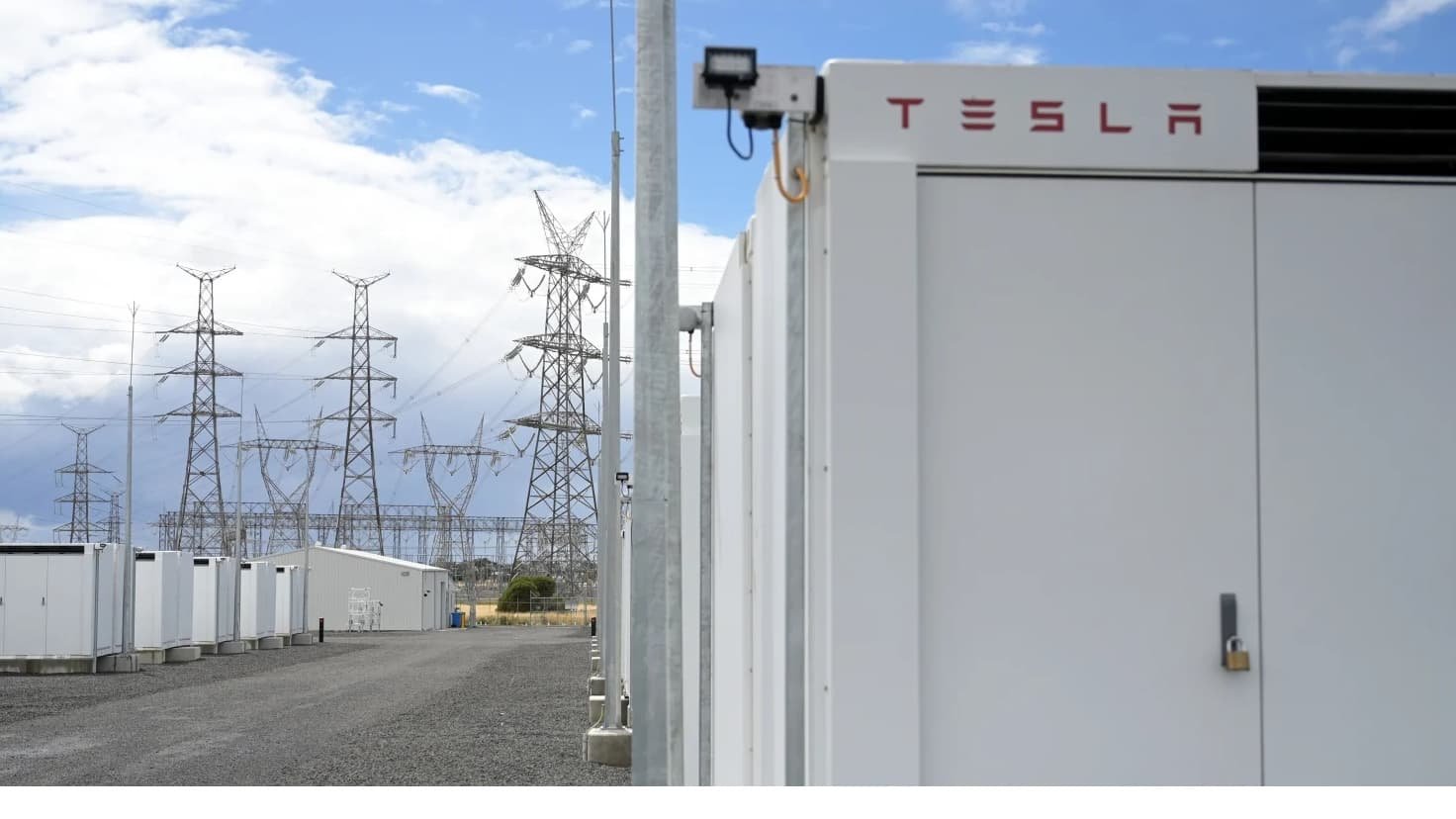
You might be wondering what exactly they are installing in Shanghai. It’s called the Megapack.
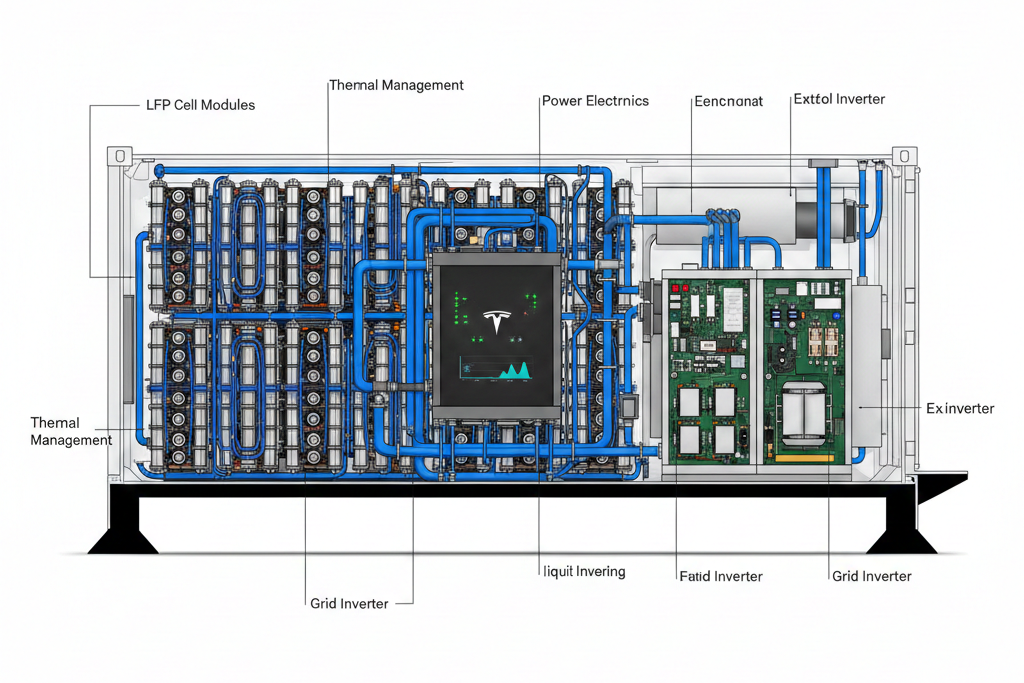
Think of it as a massive shipping container, but instead of carrying furniture or electronics, it is packed with lithium-ion batteries, cooling systems, and smart computers.
The LFP Advantage
Here is a technical detail that is actually super important. The Megapacks produced in Shanghai mostly use LFP (Lithium Iron Phosphate) cells.
Why does this matter?
- Safety: LFP batteries are less likely to overheat compared to other types.
- Durability: They last longer, handling more charge and discharge cycles.
- Cost: They are much cheaper to make because they don’t use expensive metals like cobalt and nickel.
This switch to LFP is a huge reason why the project is financially viable. It allows Tesla to deploy massive amounts of storage without breaking the bank.
Tesla China Battery Project Renewable Energy Cost: The Economics
Let’s talk about money. When we analyze the Tesla China battery project renewable energy cost, we see a trend that is making fossil fuels nervous.
The cost of batteries has plummeted. By early 2024, the price for a turnkey energy storage system in China dropped to just $115 per kWh. That is a 43% drop from the previous year.
Why Cheap Batteries Change Everything
In the past, storing electricity was too expensive. It was cheaper to just burn more coal or gas when you needed power. But now, with prices hitting these lows, it makes financial sense to build solar farms and pair them with batteries.
This project in Shanghai is proving that green energy isn’t just good for the planet; it is good for the wallet.
Implications of Lower Costs:
- Cheaper Bills: Eventually, grid efficiency can stabilize consumer electricity prices.
- Less Coal: It becomes harder to justify building new coal plants when solar + storage is cheaper.
- Massive Scale: With lower costs, Tesla can build bigger projects for the same amount of capital.
You May Also Read: Doomsday Plane USA
Strategic Alignment: Tesla and China’s Goals
It is no secret that the relationship between the US and China can be tense. However, business—especially green business—often finds a way to bridge the gap.
This project hits the sweet spot for both parties. China gets the best technology to stabilize its grid, and Tesla gets access to the world’s largest energy market. It is fully in step with China’s “Made in China 2025” plan, emphasizing advanced manufacturing and sustainable development.
Here is how their goals overlap:
| Aspect | Tesla’s Role | China’s Goals | Impact on Sustainability |
| Battery Production | Expansion of Gigafactory in Shanghai. | Increase domestic tech production. | Reduces shipping emissions and boosts local supply. |
| Renewable Usage | Providing storage for solar/wind. | 20% renewable energy by 2025. | Allows renewables to be used 24/7, not just when sunny. |
| Market Growth | Selling Megapacks globally. | Carbon Neutrality by 2060. | Accelerates the global shift away from fossil fuels. |
The ESG Factor: Sustainability Meets Business
You might have heard Elon Musk criticize ESG (Environmental, Social, and Governance) rankings in the past. He thinks the rating systems are broken. But ironically, this Tesla China battery project renewable energy deal is a textbook example of perfect ESG execution.
Environmental Impact
This is the obvious one. By installing grid-scale batteries, Shanghai can turn off “peaker plants.” These are dirty power plants that only turn on when electricity demand is super high (like on a hot summer day). Batteries can handle that demand instead, with zero emissions.
Social and Governance
The deal creates jobs in Shanghai. It also involves transparent contracts with local governments and leasing companies. Even if the CEO doesn’t like the label, the company is doing the work that ESG investors love to see.
Global Ripple Effects: Beyond Shanghai
While this article focuses on China, the ripples are felt everywhere. Tesla is using Shanghai as a launchpad. The Megapacks built there aren’t just for China; they are being shipped to help grids in Australia, Europe, and potentially other parts of Asia.
The “Terawatt” Vision
Tesla has a stated goal to reach “terawatt-scale” production. A terawatt is 1,000 gigawatts. It is a mind-boggling amount of energy. Projects like the $557 million Shanghai station are the building blocks of this vision.
We are seeing a shift where Tesla is becoming an energy infrastructure company that also happens to sell cars. Analysts believe that soon, the energy division could make up 14% or more of the company’s total value.
Challenges and The Road Ahead
Is it all smooth sailing? Not necessarily. There are always challenges when you are trying to change how the world works.
- Geopolitics: Trade rules between the US and China can change overnight. Tesla has to navigate these waters carefully.
- Competition: Tesla isn’t the only player. Chinese companies like BYD and CATL are also massive battery giants. The competition is fierce, which drives innovation but makes the market tough.
- Grid Integration: Plugging a massive battery into an old electrical grid isn’t easy. It requires smart software and “digital energy” solutions to make sure everything talks to each other correctly.
However, the momentum is undeniable. The International Energy Agency (IEA) says the world needs 1,200 GW of storage by 2030 to meet climate goals. We are in a race, and right now, Tesla is sprinting.
Conclusion: A Cleaner Future
The tesla china battery project renewable energy initiative is more than just a business deal. It is a glimpse into the future. We are moving away from a world where we burn things to make electricity, toward a world where we capture energy from the sun and wind, store it in efficient LFP batteries, and use it when we need it.
With a $557 million investment, a new megafactory, and a rapidly growing market, Tesla is proving that innovation can drive both profit and the planet forward. Whether you are an investor, a tech enthusiast, or just someone who wants cleaner air, this is a project worth watching.
The grid of the future is being built right now, one Megapack at a time.