

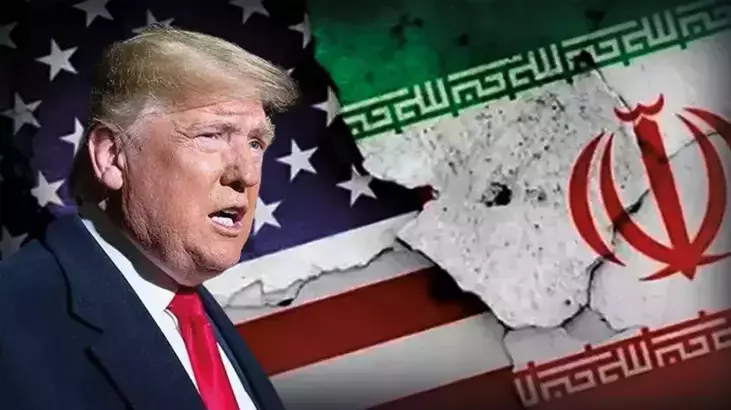
The devastating conflict that erupted in late February between the United States, Israel, and Iran has reached a volatile new flashpoint. At the center of the geopolitical storm is the Strait of Hormuz, a critical maritime chokepoint that handles roughly a fifth of the world’s traded oil and liquefied natural gas.
With global markets buckling under the pressure of the ongoing blockade, a stark diplomatic disconnect has emerged. President Donald Trump is broadcasting optimism, claiming that back-channel negotiations are yielding “major points of agreement.” In stark contrast, Tehran is forcefully rejecting any notion of dialogue, framing Washington’s shifting narrative as psychological warfare designed to artificially stabilize panicked energy markets.
The 48-Hour Ultimatum and a Sudden Reprieve
The standoff reached a fever pitch over the weekend when President Trump issued a severe 48-hour ultimatum. The directive was clear: if Iran did not immediately and unconditionally lift its de facto blockade on the Strait of Hormuz, the US military would systematically obliterate Iran’s civilian energy infrastructure, beginning with its largest power generation facilities.
However, in a sudden policy reversal just hours before the Monday deadline expired, the White House shifted gears. Trump announced a five-day postponement of all planned kinetic strikes against Iranian energy grids. The pause, according to the administration, is contingent on the continued success of what the President described as highly constructive diplomatic engagements.
Washington’s Narrative: “Productive” Back-Channel Diplomacy
Taking to social media and speaking directly to reporters in Florida, President Trump painted a picture of rapid diplomatic de-escalation. He asserted that the US and Iran had engaged in “very good and productive conversations” over the weekend, aimed at a total resolution of hostilities in the Middle East.
According to the administration’s claims, these sudden talks were brokered involving Trump’s Middle East envoy Steve Witkoff and his son-in-law, Jared Kushner. While Trump declined to name the specific Iranian officials involved, he characterized them as highly respected leaders, explicitly noting that the US was not communicating with Supreme Leader Mojtaba Khamenei.
The immediate market reaction to Washington’s optimism was dramatic. Brent crude prices, which had been surging due to the supply disruption, plummeted by over 11% before stabilizing, and global stock futures rallied on the hope that the worst of the economic fallout might be averted.
Tehran Fires Back: Denials and “Psychological Warfare”
Despite the relief rallying global financial markets, the narrative from Tehran fundamentally contradicts the White House’s claims. Iranian state media, alongside top government officials, have unequivocally denied that any direct or indirect negotiations have taken place since the joint US-Israeli offensive began 24 days ago.
Mohammad Bagher Ghalibaf, the speaker of the Iranian parliament, publicly dismissed the President’s statements as “fake news.” According to the Iranian Foreign Ministry, the White House is not pursuing peace, but rather attempting to buy tactical military time while simultaneously talking down the soaring cost of crude oil. Iranian officials insist that while regional mediators like Oman, Egypt, and Pakistan have attempted to pass messages, Tehran’s official stance remains resolute: no negotiations will occur under the threat of military force.
Mutually Assured Destruction of Infrastructure?
If the phantom diplomacy fails to materialize into a concrete ceasefire within the five-day window, the region faces the terrifying prospect of mutually assured infrastructural destruction.
Iran’s military apparatus has made it clear that they will not absorb a strike on their power grid without initiating a catastrophic regional response. The Islamic Revolutionary Guard Corps (IRGC) has threatened to irreversibly destroy critical infrastructure across the Middle East if US forces target Iranian plants. This retaliatory hit list reportedly includes energy hubs and vital water desalination facilities in allied Gulf nations—a move that would trigger an immediate humanitarian crisis by cutting off drinking water to millions of civilians.
Furthermore, Tehran has warned that an attack on its soil will result in the Strait of Hormuz being heavily mined and permanently sealed off until Iranian infrastructure is fully rebuilt.
The Clock is Ticking
As the five-day extension ticks away, the international community is left navigating a fog of war fueled by conflicting realities. Is the US administration truly on the verge of a historic, market-saving diplomatic breakthrough? Or is this merely a tactical pause before a devastating escalation that could plunge the global economy into its worst energy crisis since the 1970s? The coming days will reveal whether diplomacy or destruction will dictate the future of the Middle East.