
WASHINGTON, D.C. — Fifteen months into his second term, President Donald Trump has radically reshaped the American government. From aggressive tariff hikes that sent shockwaves through the global economy to the deployment of federal troops in major U.S. cities, the administration’s 2025–2029 policy agenda is testing the absolute limits of executive power.
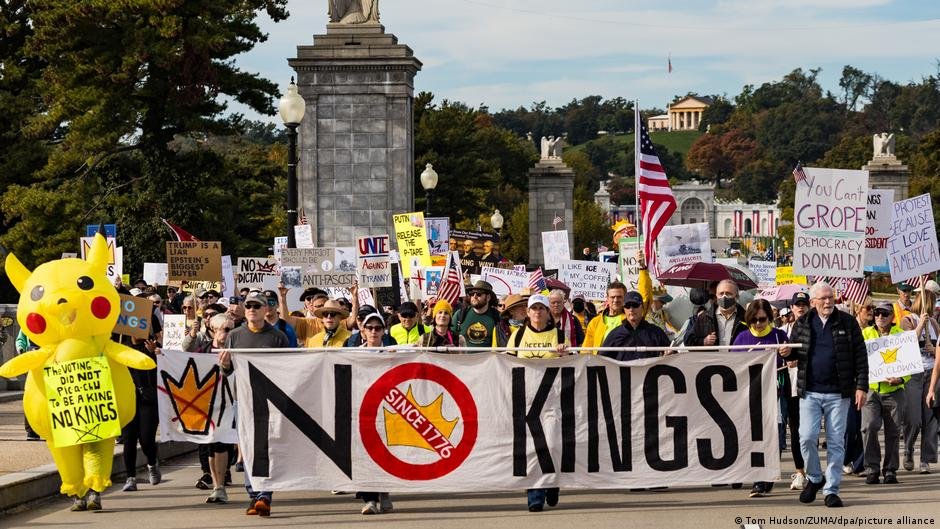
The resulting friction has sparked a nationwide movement—dubbed the “No Kings” protests—leaving voters, legal experts, and economists alike asking a critical question: Can the country handle three more years of this?
Here is an inside look at how the current administration’s policies are rewriting the rules of the United States, and what it means for the American public.
The Cost of “America First” Economics
The administration’s economic strategy hit American wallets hard throughout 2025. Promising to protect domestic manufacturing and punish foreign competitors, the White House rolled out heavy tariffs on imported goods. However, the reality on the ground told a different story.
According to data from the Yale Budget Lab, these trade duties cost the average U.S. household roughly $1,700 last year. Grocery prices reached record highs by the end of 2025, with everyday items like beef and coffee seeing double-digit price jumps. Businesses struggled to absorb the costs, passing them down to consumers and keeping inflation stubbornly high.
In a dramatic turn of events, the U.S. Supreme Court struck down the administration’s sweeping tariff policy on February 20, 2026. The ruling was a massive blow to the president’s economic agenda, setting up a fierce, ongoing battle between the Oval Office and the highest court in the land.
Adding to the financial strain was the passage of the “One Big Beautiful Bill Act.” The legislation made headlines for creating $1,000 government-funded investment accounts for babies born between 2025 and 2029. However, to fund these accounts, the bill slashed billions from food assistance and Medicaid. The Congressional Budget Office reported that the legislation would leave nearly 11 million more Americans without healthcare by 2034 while adding $2.4 trillion to the national debt over the next decade.
Executive Power and the “No Kings” Movement
The phrase “No Kings” did not emerge from thin air. It became the rallying cry for hundreds of thousands of Americans who took to the streets in June and October of 2025. The protests were a direct response to what critics view as an extreme overreach of presidential authority.
In his first year back in office, the president signed 225 executive orders—the most of any president in a single year since Franklin D. Roosevelt. The administration also bypassed local authorities to aggressively deploy federal forces to U.S. cities. Last October, 300 National Guard troops were sent to Chicago over the loud, public objections of the state’s governor and local leaders.
This push for centralized control extended directly into the federal workforce. The creation of the Department of Government Efficiency (DOGE) resulted in mass layoffs of federal workers and the targeted firings of independent agency directors. For many in Washington, these moves raised immediate alarms about the politicization of government data and public services.
A Border Strategy That Redefined the Nation
Immigration remains the undisputed cornerstone of the 2025–2029 agenda. The administration successfully secured a massive $75 billion supplemental funding package to radically expand Immigration and Customs Enforcement (ICE).
This funding, available through September 2029, is currently financing the construction of massive detention centers and the hiring of 10,000 new ICE personnel. The stated goal is to execute a mass deportation program on a scale never before seen in U.S. history. While the administration argues this is necessary for national security and job protection, the immediate result has been deep divisions in local communities, widespread protests, and a partial shutdown of the Department of Homeland Security earlier this year due to bitter budget standoffs in Congress.
The Road to 2029
As the nation moves deeper into the spring of 2026, the United States is standing on shaky ground. The midterm elections are rapidly approaching, and public frustration over inflation, cuts to social safety nets, and government shutdowns is dominating the polls.
Can America survive the 2025–2029 policies? The nation’s institutions—from the Supreme Court rejecting the tariff agenda to local city halls fighting federal troop deployments—are actively pushing back. This resistance proves that the American system of checks and balances is still functioning. But the constant, heavy tension between the White House and the rest of the country guarantees one thing: the road to 2029 will be anything but peaceful.