

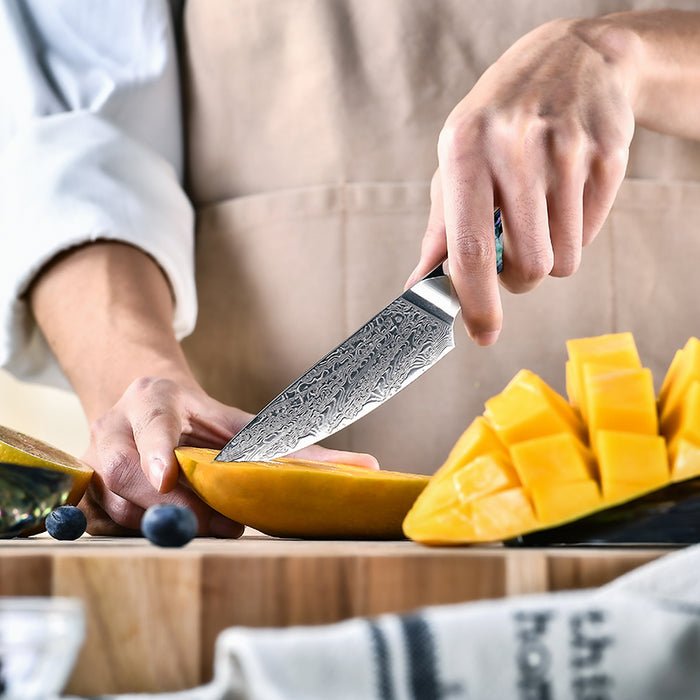
When it comes to cutting tools, few items capture the imagination quite like a Damascus utility blade. These beautifully patterned blades aren’t just tools—they’re works of art that bring centuries-old craftsmanship into the modern workshop, kitchen, and everyday carry rotation.
What Is a Damascus Utility Blade?
A Damascus utility blade is a multipurpose cutting tool forged using the ancient Damascus steel technique, creating distinctive wavy or mottled patterns on the blade surface. Unlike standard utility blades made from single-type steel, Damascus blades are created by forge-welding multiple layers of steel together, then folding and manipulating the metal to create both superior edge retention and that signature rippling pattern.
The result? A blade that’s as functional as it is stunning to look at.
The History Behind Damascus Steel
The term “Damascus” comes from the capital of Syria, where these distinctive blades were first traded and sold during medieval times. Original Damascus steel from the region was legendary for its strength and sharpness, though the exact original formula was lost to history.
Today’s Damascus utility blades use a different but equally impressive technique called pattern welding. Modern bladesmiths layer different types of steel—typically combining high-carbon steel with nickel or other alloys—then forge them together through repeated heating, folding, and hammering. This process creates anywhere from 50 to over 300 layers, depending on the desired pattern and performance characteristics.
Why Choose a Damascus Utility Blade?
Exceptional Edge Retention
The layering process in a Damascus utility blade creates a blade with superior edge retention compared to standard utility knives. The combination of different steel types means you get the benefits of both: the hardness of high-carbon steel for keeping a sharp edge, combined with the toughness of softer steel layers that prevent chipping and cracking.
Stunning Visual Appeal
Let’s be honest—one of the main draws of a Damascus utility blade is its appearance. The swirling, flowing patterns created during forging make each blade unique. Whether you’re using it in a professional setting or as part of your everyday carry, a Damascus blade is a conversation starter that reflects craftsmanship and quality.
Corrosion Resistance
Many Damascus utility blades incorporate stainless steel layers or receive special etching and finishing treatments that enhance their resistance to rust and corrosion. While not all Damascus steel is stainless (some prefer carbon steel for its superior edge-taking ability), modern bladesmiths have created Damascus patterns using stainless steel combinations that offer both beauty and practicality.
Versatility in Use
A utility blade is meant to be versatile, and Damascus versions excel at this. From opening packages and cutting rope to detailed craft work and light food preparation, a Damascus utility blade handles everyday cutting tasks with ease while delivering precision when you need it.
Types of Damascus Patterns
One of the fascinating aspects of Damascus utility blades is the variety of patterns available. The pattern isn’t just cosmetic—it’s a reflection of how the blade was forged.
Ladder Pattern: Creates a series of parallel lines that look like rungs on a ladder. This pattern is achieved through straight-line grinding after the layering process.
Twist Pattern: Features diagonal or spiraling lines created by twisting the steel billet before forging it into shape.
Raindrop Pattern: Circular patterns that resemble raindrops on water, created by drilling or grinding divots into the steel before final forging.
Random Pattern: The most organic-looking option, featuring flowing, irregular patterns that emerge naturally from the folding and forging process.
Feather Pattern: Delicate, feather-like patterns created through specific grinding and etching techniques.
Each pattern type affects not just appearance but can also influence how the blade performs in cutting tasks, as different patterns expose different types of steel along the cutting edge.
Damascus Utility Blade vs. Standard Utility Blade
How does a Damascus utility blade stack up against a standard utility knife? Here’s a practical comparison:
Sharpness: Damascus blades typically hold a sharper edge longer due to their layered construction and high-quality steel composition.
Durability: The forging process creates a blade that’s both hard and tough, meaning it’s less likely to chip or break during demanding tasks compared to cheaper utility blades.
Price: Damascus utility blades are significantly more expensive than standard utility knives. While you can find a basic utility knife for under $10, a quality Damascus utility blade typically starts around $50 and can exceed $200 for custom pieces.
Maintenance: Damascus blades require more care than disposable utility blades. They need proper cleaning, occasional oiling (especially for carbon steel versions), and should be stored in a dry environment.
Blade Replacement: Unlike utility knives with replaceable razor blades, Damascus utility blades are designed to be sharpened and maintained rather than replaced, making them a long-term investment.
How to Care for Your Damascus Utility Blade
Owning a Damascus utility blade means committing to proper care. Here’s how to keep your blade in top condition:
Cleaning
Always clean your Damascus utility blade immediately after use. Use warm water and mild dish soap, then dry thoroughly with a soft cloth. Never let the blade air dry, as this can lead to water spots or, worse, rust formation on carbon steel blades.
Oiling
For carbon steel Damascus blades, apply a thin coat of mineral oil, knife oil, or food-grade mineral oil after each cleaning. This creates a protective barrier against moisture and oxidation. Stainless Damascus blades require less frequent oiling but still benefit from occasional treatment.
Storage
Store your Damascus utility blade in a dry environment, preferably in a sheath or protective case. Avoid storing it in leather sheaths long-term, as leather can retain moisture and cause corrosion.
Sharpening
When your Damascus utility blade needs sharpening, use a whetstone rather than a pull-through sharpener. Start with a 1000-grit stone for normal maintenance, then finish with a 3000-6000 grit stone for a razor-sharp edge. Maintain the blade’s original angle—typically 15-20 degrees for utility blades.
The Damascus pattern will remain visible after sharpening, though it may become slightly less pronounced at the very edge of the blade.
Choosing the Right Damascus Utility Blade
Shopping for a Damascus utility blade? Keep these factors in mind:
Steel Type
Carbon Steel Damascus: Offers superior edge retention and is easier to sharpen but requires more maintenance to prevent rust. Best for users who don’t mind regular care and want the ultimate in sharpness.
Stainless Damascus: More resistant to corrosion and requires less maintenance. Ideal for humid environments or users who want lower-maintenance ownership.
High-Speed Steel (HSS) Damascus: A premium option that combines wear resistance with good edge retention, though it can be harder to sharpen at home.
Handle Material
The handle material affects both comfort and durability. Common options include:
- Micarta: Durable, grippy, and weather-resistant
- G10: Lightweight, strong, and available in various colors
- Wood: Beautiful and traditional but requires more care
- Carbon Fiber: Modern, lightweight, and extremely strong
- Titanium: Corrosion-proof and lightweight but can be slippery
Blade Length
Utility blades typically range from 2 to 4 inches. Consider what tasks you’ll perform most often. Longer blades offer more cutting surface but can be less maneuverable for detail work.
Lock Mechanism
If you’re choosing a folding Damascus utility blade, pay attention to the lock mechanism. Frame locks and liner locks are popular for their reliability and ease of use.
Budget
Set a realistic budget. Quality Damascus utility blades from reputable makers start around $75-$100. Custom options can easily exceed $300. Beware of extremely cheap “Damascus” blades—they may be fake patterns laser-etched onto standard steel.
Are Damascus Utility Blades Worth the Investment?
The question of value is personal, but here’s the reality: a Damascus utility blade is a premium tool that combines functionality with artistry. You’re not just buying a cutting implement; you’re investing in a piece of functional art that can last decades with proper care.
For professionals who use utility blades daily—contractors, craftspeople, artists—a Damascus utility blade offers reliable performance and can pay for itself through longevity alone. No more buying replacement blade packs every few months.
For collectors and enthusiasts, a Damascus utility blade represents the pinnacle of blade-making craft. Each one is unique, carrying the marks of its creation process and the skill of its maker.
For casual users who simply want a quality tool that performs well and looks beautiful, a Damascus utility blade delivers satisfaction every time you use it.
Common Myths About Damascus Utility Blades
Let’s dispel some misconceptions:
Myth: “All Damascus patterns are just for show.” Reality: While the pattern is beautiful, the layering process also creates functional benefits in edge retention and blade toughness.
Myth: “Damascus steel is impossible to sharpen.” Reality: Damascus blades sharpen just like any other blade. The layered construction doesn’t affect the sharpening process—you’re only removing metal from the edge itself.
Myth: “Cheap Damascus blades work just as well as expensive ones.” Reality: True Damascus steel requires skilled forging. Cheap versions often use acid-etched patterns on regular steel, offering none of the functional benefits.
Myth: “Damascus blades are too delicate for heavy use.” Reality: Quality Damascus utility blades are work tools designed for regular use. They’re actually more durable than many standard utility blades.
Top Uses for Damascus Utility Blades
While a Damascus utility blade can handle almost any cutting task, here are some areas where they truly excel:
Everyday Carry (EDC)
A folding Damascus utility blade makes an excellent EDC knife. Its compact size means it’s legal to carry in most jurisdictions, while the quality construction ensures it’s ready for whatever cutting tasks your day brings.
Craft and Hobby Work
The precision and edge retention of Damascus utility blades make them ideal for detailed craft work—leatherworking, paper crafts, model building, and more.
Light Kitchen Tasks
Many people use Damascus utility blades as paring knives or for food prep tasks that require precision. The easy-to-clean nature and corrosion resistance (especially in stainless versions) make them suitable for kitchen use.
Camping and Outdoor Activities
A Damascus utility blade serves as a reliable backup knife for camping, fishing, and hiking. It’s small enough to pack easily but capable enough to handle most outdoor cutting needs.
Professional Use
Contractors, electricians, and other tradespeople appreciate the reliability and edge retention of Damascus utility blades for daily cutting tasks on job sites.
The Future of Damascus Utility Blades
The market for Damascus utility blades continues to grow as more people discover the benefits of quality hand-forged tools. Modern bladesmiths are experimenting with new steel combinations, creating Damascus patterns with exotic metals like titanium and mokume-gane (a Japanese technique similar to Damascus).
3D printing and computer-controlled forging processes are also entering the Damascus blade world, though purists still prefer entirely hand-forged pieces. These new techniques may make Damascus utility blades more accessible while maintaining quality.
Sustainability is also becoming a focus, with some makers using recycled steel and eco-friendly handle materials without compromising the Damascus blade’s beauty or performance.
Final Thoughts: Is a Damascus Utility Blade Right for You?
A Damascus utility blade represents the intersection of ancient craftsmanship and modern utility. If you appreciate quality tools, enjoy the aesthetic of hand-forged steel, and want a blade that will serve you reliably for years, a Damascus utility blade is an investment worth considering.
Yes, you’ll pay more upfront than you would for a standard utility knife. But you’re gaining a tool that won’t end up in a landfill after a few months of use. You’re supporting artisan craftsmanship. And you’re carrying a piece that’s as unique as your fingerprint.
Whether you’re a tradesperson seeking reliability, a collector pursuing beauty, or someone who simply wants the best tool for the job, the Damascus utility blade delivers on all fronts.
The swirling patterns tell a story of fire, hammer, and skill. The sharp edge gets the job done. And the satisfaction of owning and using a Damascus utility blade? That’s something no mass-produced tool can match.
Disclaimer: This article contains general information about Damascus utility blades. Always follow local laws regarding blade carry and use. Proper blade safety and maintenance are the user’s responsibility.